

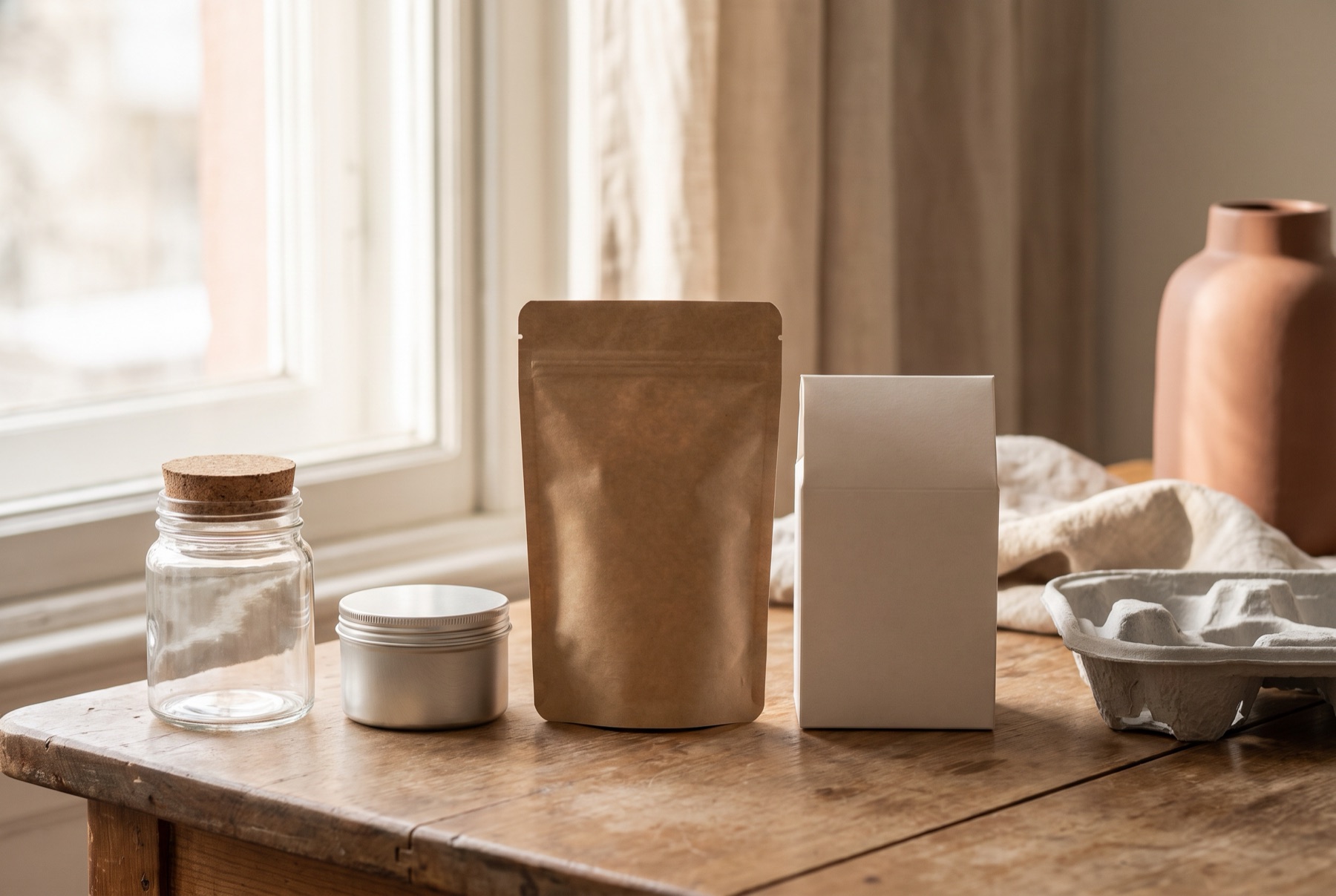
Most conversations about packaging start with graphics — colours, logo, illustration. But the first decision is structural: what is the product actually going to be packed in? That choice affects cost, shelf life, shipping, sustainability and how the brand will look. Get it right before anyone designs a label.
Start with what the product needs
Before style, think about function.
- Protection. Does the product need a barrier against light, oxygen or moisture? Is it fragile? Does it need to be tamper-evident?
- Shelf life. How long must it stay fresh, and in what conditions?
- Usage. Will people use it all at once or over weeks? Does it need to reseal, pour, pump or dispense?
- Storage. Fridge, freezer, pantry, bathroom? Each environment affects materials and adhesives.
- Regulations. Some categories have specific requirements for materials, labelling or child resistance. Check yours.
Then consider where it will be sold
- Retail shelf: it needs to stand up, face forward and hold its own among competitors.
- E-commerce: it needs to survive shipping, and it can be more about the unboxing than the shelf.
- Food service or hospitality: practicality and cost often win.
The common options
Glass
Feels premium, is endlessly recyclable and shows the product well. It is heavier and breakable, which adds shipping cost. Common for sauces, spirits, skincare and preserves.
Plastic
Light, cheap and versatile, but increasingly viewed negatively by shoppers. Recycled content and recyclable formats help. Good for products that must be squeezed or that ship long distances.
Aluminium
Cans and tubes are light, protective and widely recyclable. Popular for drinks and, increasingly, for personal care.
Paperboard cartons
Great canvas for graphics and widely recyclable when uncoated. Often used as an outer layer around a bottle, jar or tube.
Flexible pouches
Lightweight, efficient to ship and space-saving on shelf. Stand-up pouches with windows work well for dry foods, snacks and refills. Recyclability depends heavily on the specific material.
Kraft paper
Signals natural and handmade, and is often recyclable. Cedar Creek‘s marinade mixes moved to recyclable kraft paper with a clear product window — a combination that made the flavours easy to recognise and appealed to shoppers looking for more sustainable choices.
Balancing cost and minimums
Custom structures are distinctive but come with tooling costs and large minimum orders. Stock containers — standard jars, bottles and boxes — are cheaper and quicker, and can still look excellent with the right labels and finishes. Most new brands are well served by a stock structure with strong graphics, then move to a custom structure once volume justifies it.
Always ask suppliers for:
- Minimum order quantities
- Lead times
- Unit costs at several volumes
- Physical samples
Test before you commit
Order samples, fill them with real product, and live with them. Ship a few to yourself. Put them in the fridge, the bathroom, the bag. Check that labels stay on, lids stay closed and the product stays fresh.
Then design
Once the format is fixed and you have an exact dieline from your supplier, the graphic design can begin — with the confidence that it will fit the structure it is meant for.
If you are weighing up formats for a new product, we can help you think it through.