

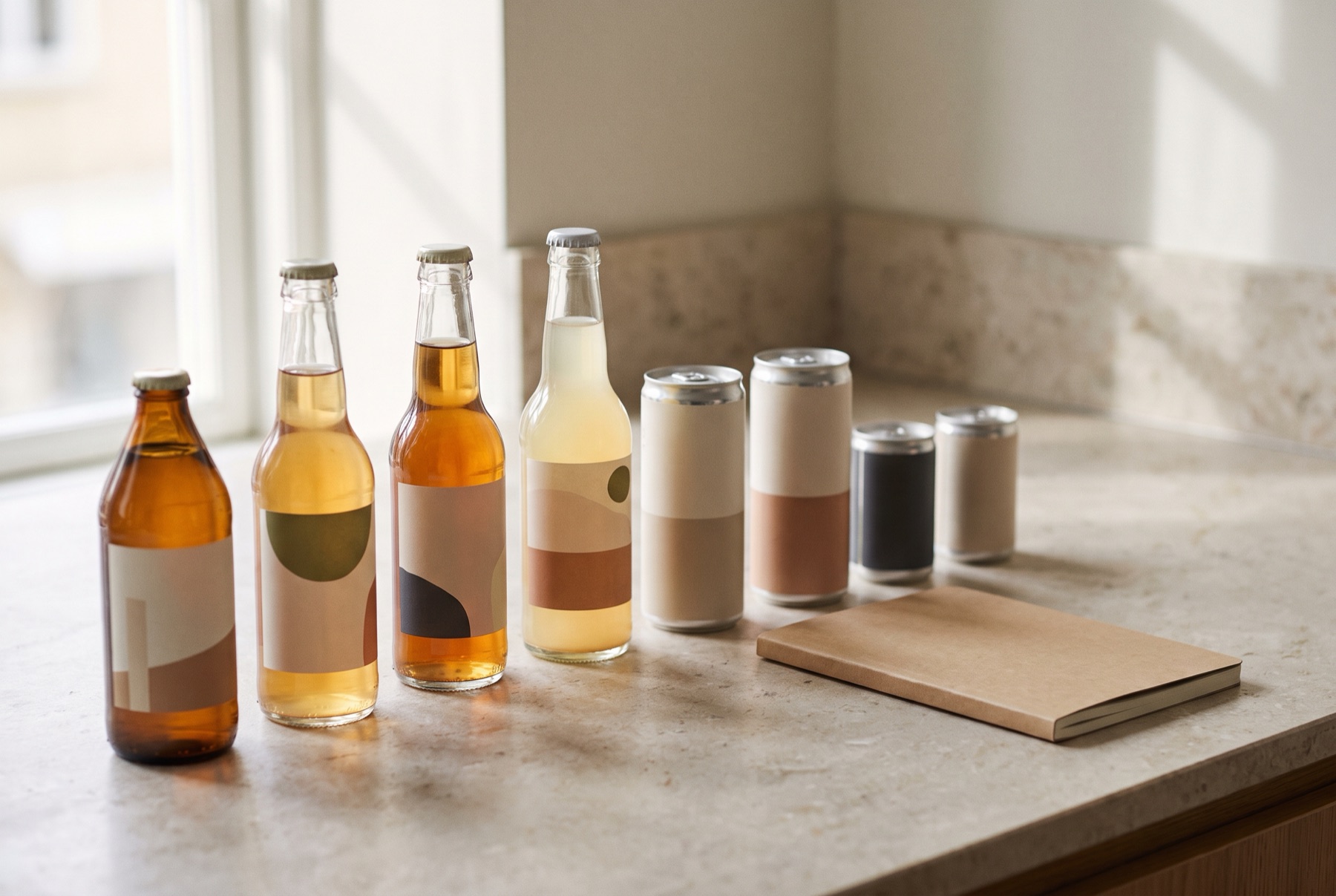
Beverages are one of the most exciting categories to launch into, and one of the most demanding. Margins are tight, shelf life matters, shipping liquid is expensive, and the cooler door is one of the most competitive pieces of retail real estate there is. Here is a practical sequence for getting a drink from idea to shelf.
1. Find the gap
Start with the drinker, not the drink. Who is it for, and what are they drinking now that does not quite satisfy them? Look closely at the category — energy drinks, functional beverages, sodas, cold brew, juices, non-alcoholic alternatives — and map who is already there and what each brand promises.
Your opportunity is usually one of:
- A better version of something people already drink (cleaner ingredients, less sugar, better taste)
- A new occasion for an existing drink
- A specific audience that existing brands ignore
2. Develop the formula properly
A recipe that works in a kitchen is not a formula that works at scale. You will likely need a beverage developer or flavour house to:
- Scale the recipe and keep the taste consistent
- Work out shelf life and whether it needs refrigeration
- Determine processing — hot fill, pasteurisation, cold pressing
- Make sure ingredients and claims meet regulations
This stage takes longer than most founders expect. Build in time.
3. Choose your format
Can, glass bottle, plastic bottle, carton or pouch — the choice affects cost, minimum orders, shelf life, weight, sustainability and how your brand looks.
- Cans are light, recyclable, stack well and offer a full wraparound canvas.
- Glass reads as premium and craft, but is heavier and breakable.
- Plastic is cheap and light, but increasingly unpopular with shoppers.
Confirm the exact container with your co-packer before any artwork is designed.
4. Find a co-packer
Most beverage startups use a co-packer — a facility that produces and packages drinks for multiple brands. Look at their minimum run sizes, the container formats they support, their certifications and their schedule. Visit if you can, and ask for references.
5. Build the brand and the packaging
A beverage has to work from across the store and through a cooler door. Prioritise:
- A strong brand block that is legible at distance and through glass
- Colour coding across flavours so the range reads as a family
- A clear statement of what the drink is and why it is different
- Wraparound thinking — cans rotate, so design all the way round
6. Price it so it works
Work backwards from shelf price: retailer margin, distributor margin (if you use one), freight, promotions, and your cost of goods. Many beverage brands discover too late that their shelf price only works if nobody takes a cut. Model it carefully before you produce.
7. Pick a starting channel
Options include direct online sales, local independents, cafés and restaurants, regional grocers, and gyms or specialty shops for functional drinks. Starting local and focused lets you learn, build velocity data, and approach larger retailers with proof.
8. Launch with sampling
Nothing sells a drink like tasting it. In-store demos, events, creator seeding and partnerships with local businesses put the product in hands. Pair them with strong social content and a simple website.
9. Track velocity and reorder fast
Retailers care about how quickly a product sells per store per week. Watch it closely, support slow stores with demos or promotion, and make sure you can restock quickly.
The short version
Find the gap, develop a real formula, lock the format, find a co-packer, design for the cooler door, price for the full chain, start focused, sample relentlessly, and watch velocity.
If you are developing a drink and need the brand and packaging to match the ambition, let’s talk.