

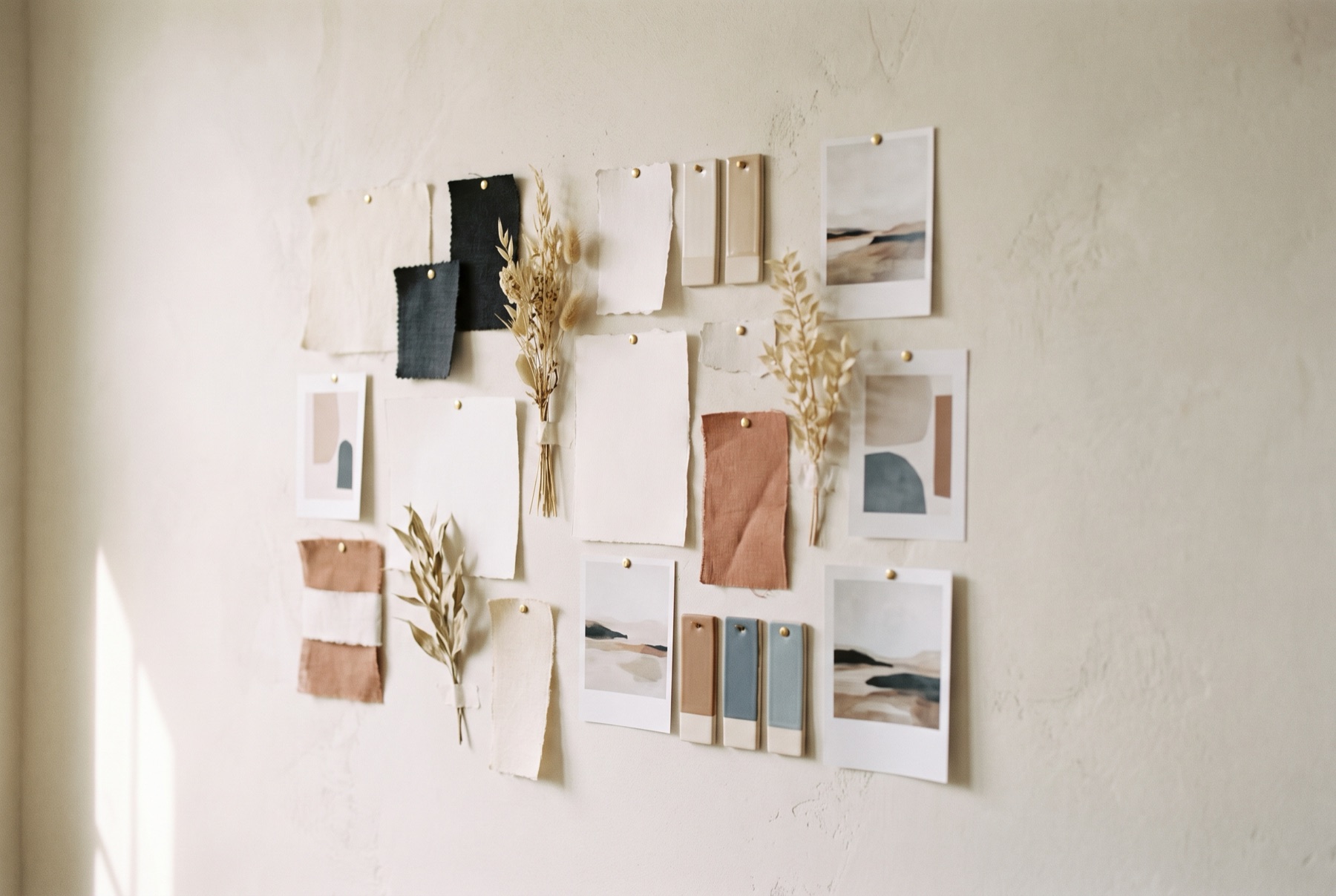
Words like “modern”, “premium”, “natural” or “playful” mean different things to different people. A mood board fixes that. It is a visual collection of images, colours, textures and type that captures the feeling a brand is aiming for. Before any logo or packaging is designed, it gives everyone something concrete to agree on.
Why mood boards help
- Shared understanding. Founders, designers, and stakeholders can point at what they mean.
- Faster decisions. Agreeing a direction early prevents expensive changes later.
- Consistency. The board becomes a reference throughout the project.
- Exploration. Comparing several boards lets you test different directions cheaply.
What to include
- Photography that captures the mood — lighting, settings, people, products
- Colour — swatches or images with a strong palette
- Typography — examples of type that feels right
- Textures and materials — paper, glass, wood, fabric, finishes
- Patterns and graphic details
- Packaging and design references from outside your category
- Words — a few key adjectives to anchor the direction
How to make one
1. Start with your brand words
Choose three to five words that describe the brand’s personality. Every image on the board should support them.
2. Collect widely
Gather far more images than you need, from many sources — photography, architecture, fashion, interiors, nature, print. Look outside your category; it leads to more original results.
3. Edit hard
Remove anything that does not fit the brand words. Remove duplicates. Keep only the strongest images.
4. Arrange with care
Composition matters. Group related images, give key images more space, and make sure the overall board feels like the brand.
5. Create more than one
For a new brand, creating two or three boards with different directions — say, warm and crafted versus clean and clinical — helps you see options side by side.
6. Review and choose
Discuss what feels right and why. Often the final direction combines elements from several boards.
Common pitfalls
- Too literal. Filling a coffee brand’s board with coffee images limits imagination.
- Too broad. Including everything you like makes the board meaningless.
- Copying. A mood board is inspiration, not a blueprint. The final design should be original.
From mood board to brand
Once agreed, the mood board guides decisions on colour, type, photography and packaging.
Mood boards were a formal deliverable when we worked on Sacred Essentials, alongside the logo, packaging, brand presentation and print mechanicals. They set the direction for a more premium, natural and therapeutic expression of the brand before any packaging was drawn — so the design that followed had something agreed to answer to.
If you are starting a brand and want to set the right direction from the beginning, get in touch.