

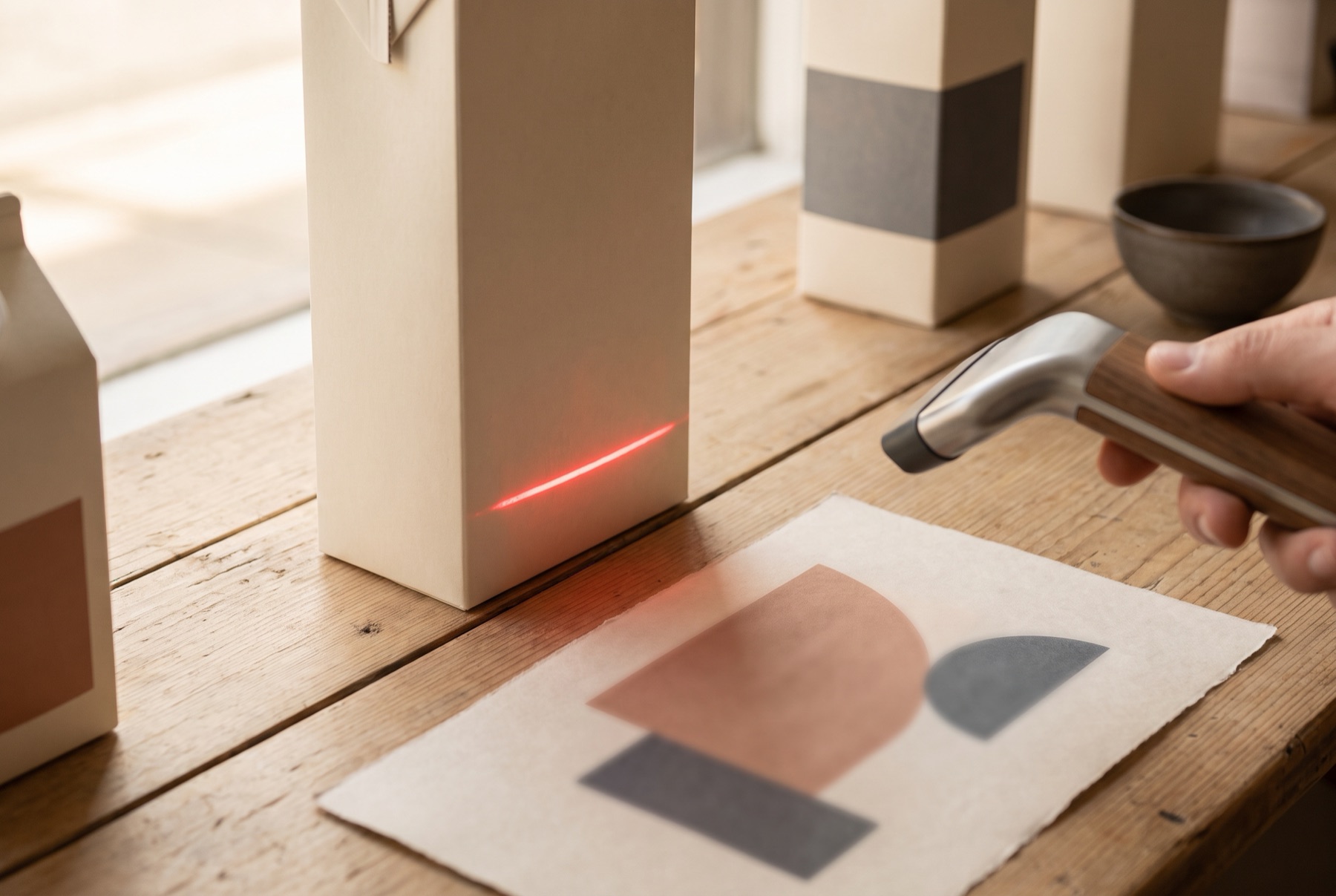
The barcode is often the last thing added to a pack and the first thing a retailer checks. It is easy to overlook, but problems with barcodes can delay listings, cause checkout errors or force costly reprints. Here is what product businesses need to know.
What a barcode is
The barcode on most retail products in North America is a UPC (Universal Product Code). Elsewhere, the closely related EAN format is common. The barcode represents a unique number — a GTIN (Global Trade Item Number) — that identifies a specific product.
Every variant needs its own number. A different size, flavour or colour is a different product, so it needs a different barcode.
Where barcodes come from
The global standard is managed by GS1, a not-for-profit organisation with member offices in many countries. Brands license a company prefix from GS1 and use it to create unique numbers for their products.
You will find cheaper barcodes offered by resellers. Be cautious. Many larger retailers check that a barcode’s company prefix is registered to the brand selling the product. Resold numbers may not be linked to your business, which can cause problems with retailers and marketplaces. If you plan to sell through major retailers, licensing directly from GS1 is generally the safer route.
Do you need barcodes?
You probably need barcodes if you plan to sell:
- In grocery, chain or most independent retail stores
- Through many online marketplaces
- Through distributors
You may not need them if you only sell directly at markets or through your own website — but if retail is in your plans, it is often easier to set them up early.
Designing barcodes onto packaging
Barcodes have technical requirements. Getting them wrong means they may not scan.
- Size: barcodes have a standard size and can only be reduced so much. Shrinking too far can make them unreadable.
- Quiet zone: leave clear space on each side with no graphics.
- Contrast: dark bars on a light background. Black on white is safest. Red bars do not scan, and some colour combinations fail.
- Placement: usually on the back or bottom, on a flat surface, avoiding curves, folds and seams.
- Height: avoid trimming the bars too short.
- Material: some surfaces — like reflective metals or clear films — need a white backing behind the barcode.
Test before printing
Always test barcodes on a printed proof, at final size, on the actual material. Scanner apps and verification services can confirm a barcode will read properly. A reprint costs far more than a test.
Keep records
Maintain a simple list of every product and its GTIN. As your range grows, this prevents duplicates and confusion.
Barcodes are part of the design
A barcode does not need to spoil a design. Thoughtful placement and good integration make it feel considered rather than stuck on. On ranges like Dale’s Soda, where a transparent aesthetic is part of the look, planning barcode placement and backing early avoids last-minute compromises.
If you are preparing packaging for retail and want every detail right, get in touch.