

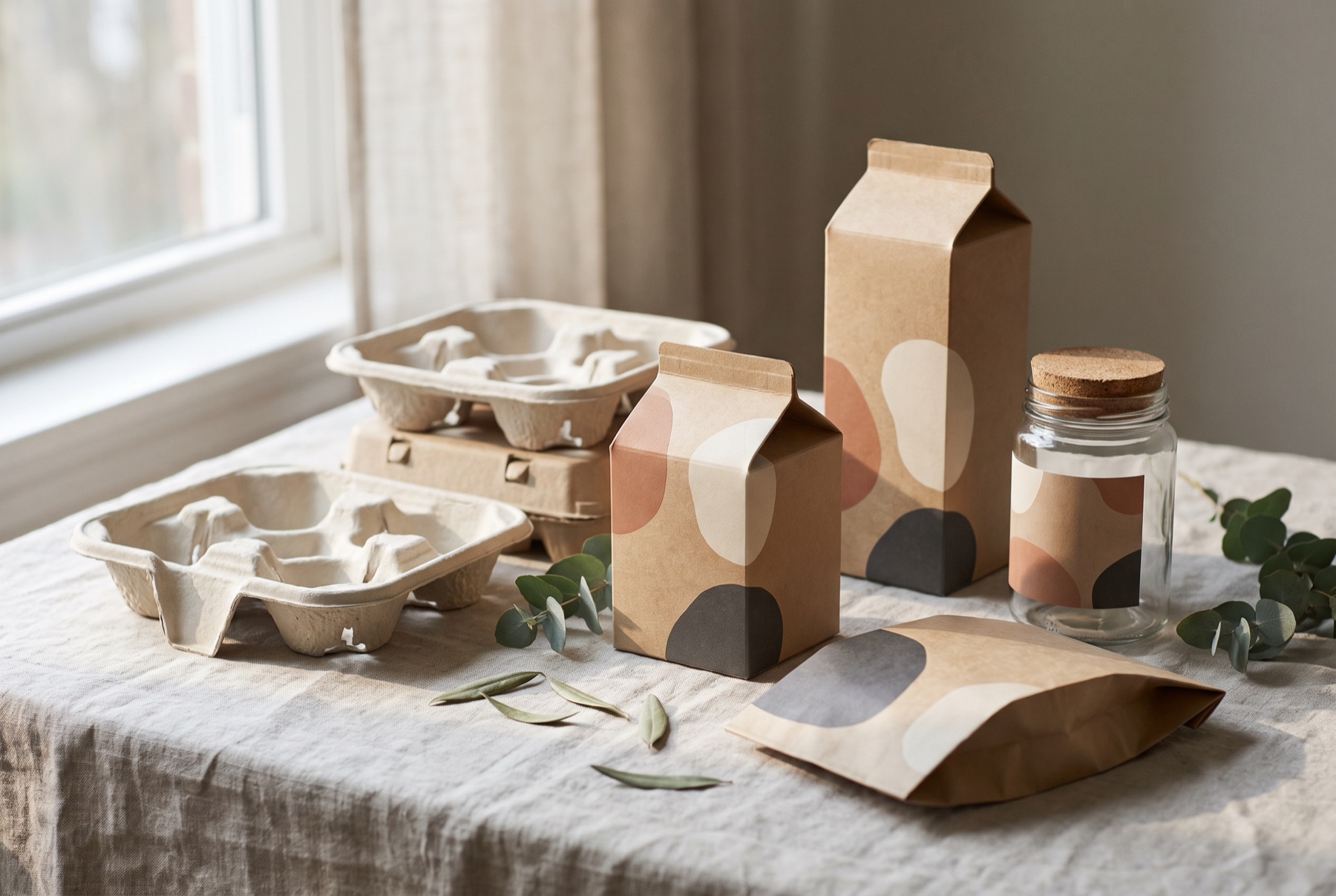
Most shoppers would rather buy packaging that is easier on the planet. Most brands would rather sell it. The difficulty is that “sustainable packaging” covers a lot of ground, some of it more marketing than substance, and a rushed switch can spoil product, raise costs or invite criticism.
Here is a measured way to approach it.
Be clear about what “sustainable” means for you
There is no single sustainable material. There are trade-offs. A few useful questions:
- Can it be recycled where your customers live? A technically recyclable material that local systems do not accept does not help much.
- Does it reduce material overall? Using less packaging is often the biggest win.
- Does it contain recycled content? Using recycled material reduces demand for new material.
- Is it reusable or refillable?
- Is it compostable — and if so, where? Many compostable materials need industrial facilities that are not widely available.
Pick the goals that make sense for your product and audience, and be honest about them.
Audit what you have now
List every component: container, closure, label, outer carton, inserts, shipping materials. For each, note the material, weight and whether it is recyclable in practice. Often the easiest wins are not the primary pack at all — they are unnecessary outer boxes, plastic inserts or oversized shipping cartons.
Common improvements
- Remove what is not needed. Outer cartons around a jar that already protects the product, plastic windows, excess tissue.
- Right-size. Smaller cartons and shippers mean less material and cheaper freight.
- Choose mono-materials. Packaging made from a single material is much easier to recycle than mixed laminates.
- Increase recycled content in bottles, cartons and mailers.
- Switch to paper-based options where they protect the product well enough.
- Offer refills for products used regularly.
When Cedar Creek moved its marinade mixes to recyclable kraft paper with a clear window, the packaging told a sustainability story without a single claim needing to shout — and the window made flavour recognition easier at the same time.
Protect the product first
The most wasteful packaging is the one that fails. Food that spoils because a new material lets in oxygen or moisture creates far more environmental impact than the packaging saved. Test new materials with real product, in real storage conditions, for the full shelf life before switching.
Watch your claims
Environmental claims are increasingly scrutinised. Avoid vague words like “eco-friendly” or “green” on their own. Be specific — “carton made from 80% recycled board”, “recyclable where facilities exist” — and be able to prove it. Your supplier should provide documentation.
Tell people how to dispose of it
Clear disposal instructions on the pack help packaging actually end up in the right place. A small, simple instruction — “rinse and recycle the jar, compost the label” — does more good than a large leaf icon.
Do it in stages
You do not need to change everything at once. Start with the easiest, most visible improvements, measure the effect on cost and shelf life, and move on. Each step is something honest to tell your customers about.
If you are planning a more sustainable pack and want help balancing the trade-offs, get in touch.