

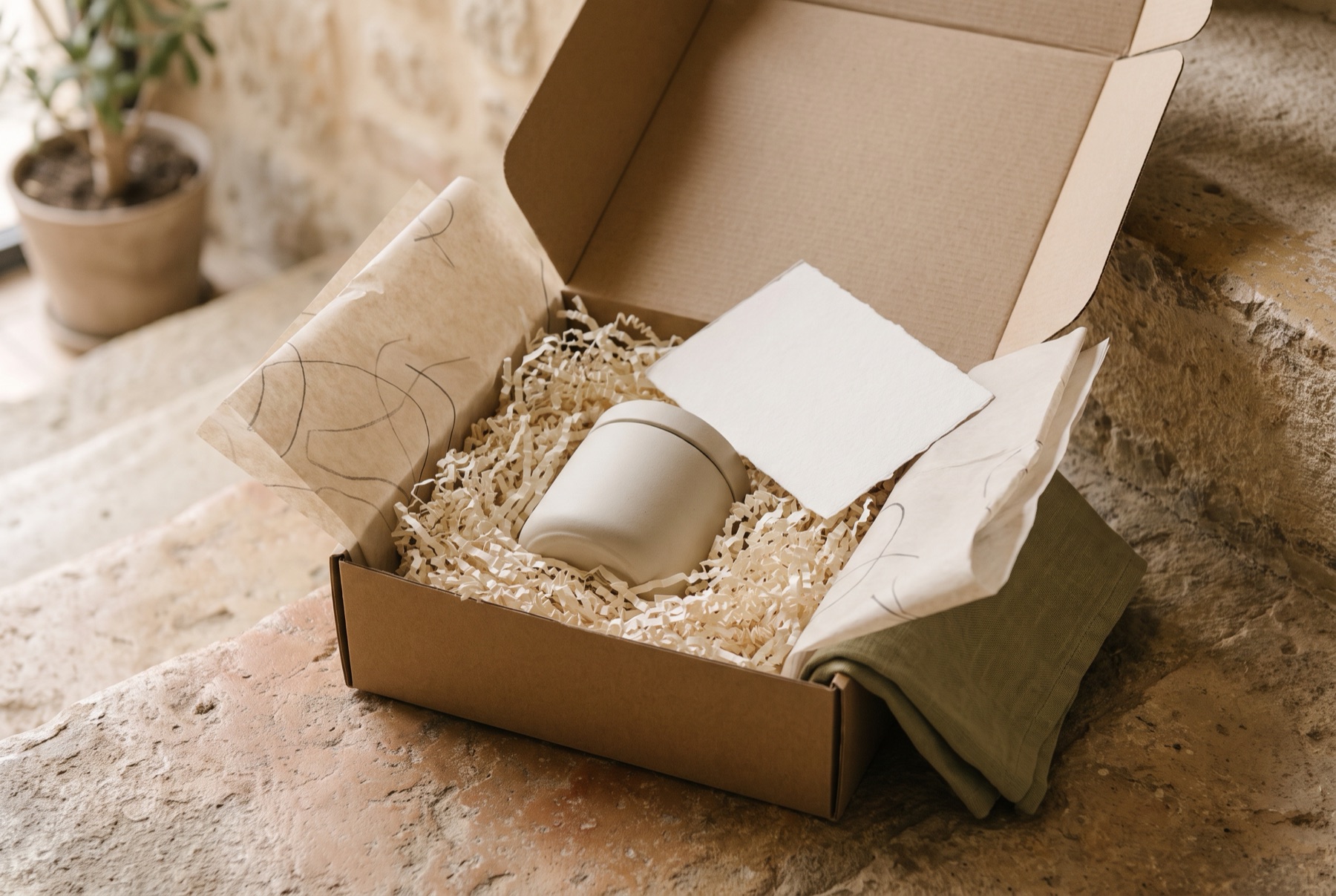
On a store shelf, packaging has to attract attention among competitors. Online, the product is chosen from a screen, and the packaging’s first real moment comes on a doorstep. That changes what packaging needs to do. It has to survive shipping, arrive intact, and create an experience that makes customers want to order again — and perhaps share it.
Protection first
The most beautiful packaging is a failure if the product arrives broken or leaking.
- Right-size the box. Too much space means movement and damage; too little means crushing.
- Use appropriate inserts. Paper-based inserts, moulded pulp or corrugated dividers protect without excessive plastic.
- Seal liquids. Leak-proof closures and secondary sealing prevent disasters.
- Test shipping. Send packages to yourself and friends across different distances and carriers.
Think in layers
E-commerce packaging usually includes:
- Shipping box or mailer — the outer layer that protects in transit
- Inner packaging — tissue, inserts, wraps
- Product packaging — the primary pack
- Inserts — notes, instructions, offers
Each layer is an opportunity to express your brand.
Create an unboxing moment
Customers remember how it felt to open a package.
- Branded mailers or a simple sticker on a plain box
- A printed interior that surprises when opened
- Tissue paper or wraps in brand colours
- A thank-you note, handwritten if possible for early orders
- Usage tips or a story about the product
- A small extra, like a sample
These touches do not need to be expensive. A plain kraft box with a printed interior can feel more special than a fully printed box.
Design for the camera
Unboxing is frequently filmed and photographed. Overhead views dominate. Consider what is visible when the lid opens, how products are arranged, and how the brand appears.
Be sustainable
Customers increasingly dislike excess packaging and plastic fillers.
- Use recyclable or recycled materials
- Avoid oversized boxes
- Choose paper-based fillers
- Include disposal instructions
- Design mailers that can be reused for returns
Manage costs
Shipping costs are affected by size and weight. Lightweight, right-sized packaging saves money on every order. Balance experience with efficiency, and focus spending where customers notice most.
Keep it consistent
Your e-commerce packaging should look like your website, your social media and your product packaging. A unified experience builds trust.
An example
Sacred Essentials sells through its own website, and its harmonious colour palette and clear messaging are built to carry through from the screen to the product in hand. When the packaging matches what customers saw on the website, the delivery confirms they made the right choice.
If you are planning e-commerce packaging and want it to feel like a gift, get in touch.