

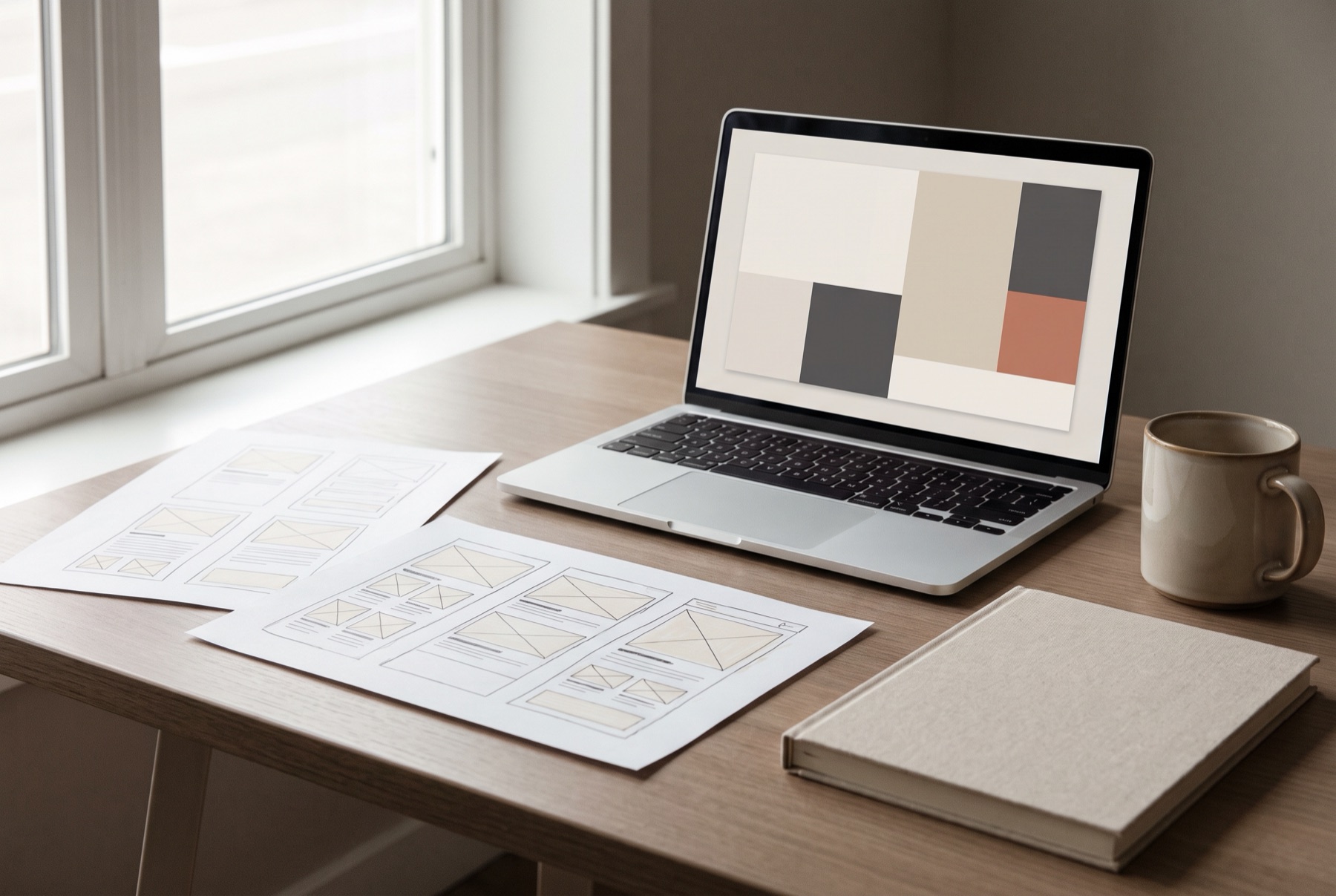
Websites age faster than almost any other brand asset. Technology moves on, expectations change, and businesses evolve. A site that felt fresh a few years ago can now be slow, hard to update and out of step with the brand. Here is how to know when it is time for a redesign, and how to do it well.
Signs you need a redesign
- It looks dated next to competitors.
- It does not reflect your brand, especially after a rebrand or packaging change.
- It is slow or performs poorly on phones.
- It is hard to update, so content goes stale.
- It is not converting — visitors arrive but do not buy, enquire or sign up.
- Navigation is confusing after years of additions.
- Your business has changed — new products, services or audiences.
- Security or technical problems keep appearing.
Before you start
Define goals
What should the new site achieve? More sales, more enquiries, better information, easier updates? Clear goals guide every decision.
Review what you have
Look at analytics to see which pages get traffic, where visitors drop off and which content performs. Keep what works.
Know your audience
Who visits, and what do they need? Design around their tasks, not your organisational chart.
Gather content
Content is often the slowest part. Plan text, photography and product information early.
The redesign process
- Strategy and structure. Define pages, navigation and the path visitors take.
- Wireframes. Simple layouts focused on content and hierarchy.
- Visual design. Apply your brand — colours, typography, imagery.
- Development. Build on a platform suited to your needs.
- Content. Write and prepare clear, concise copy.
- Testing. Check across devices, browsers and speeds; test forms and checkout.
- Launch. Plan carefully, including redirects from old pages.
- Measure. Track results against your goals.
Protect your search visibility
A redesign can affect how you appear in search results. Keep valuable pages, set up redirects from old addresses to new ones, maintain page titles and descriptions, and keep content that ranks well.
Common mistakes
- Designing for yourself rather than your visitors
- Ignoring mobile
- Leaving content until last
- Over-complicating with features nobody uses
- Forgetting about speed — large images and unnecessary scripts slow sites down
- Not planning redirects
Make it look like your brand
Your website should look and feel like your packaging, signage and printed materials. When we designed the identity for Jessica Suzanne Interiors, web design was part of the same system — the pattern-based marks and deep aubergine palette carried across print and screen, so the practice looks the same wherever someone meets it.
If your website no longer represents your business, let’s talk.