

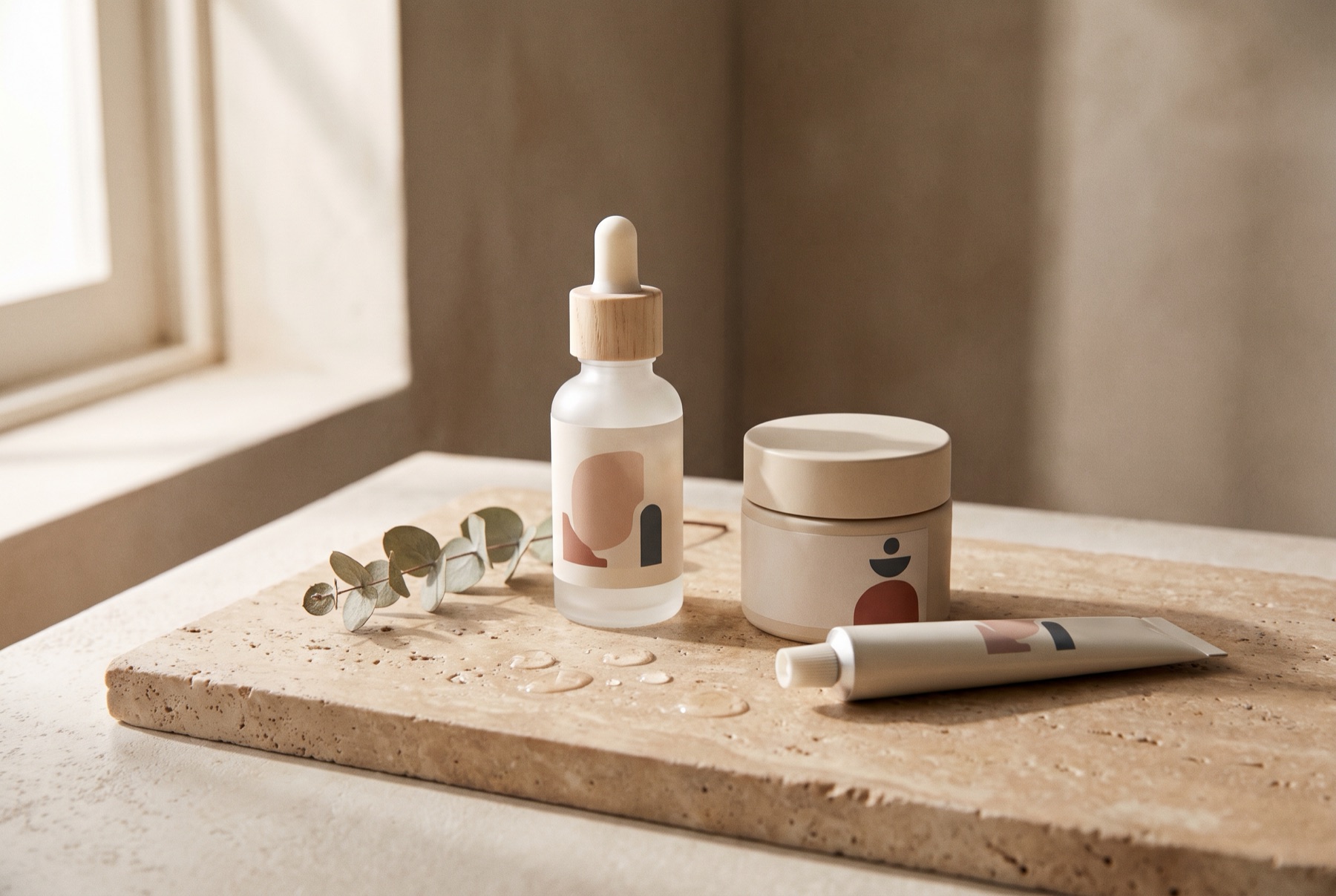
Beauty and personal care packaging lives a different life from most products. It sits on bathroom shelves and dressing tables for weeks or months. It gets picked up daily, photographed for social media, and judged against some of the most design-led brands in retail. It has to protect the formula, dispense it properly and make people feel good about using it.
Start with the formula
The product determines the packaging more than anything else.
- Viscosity decides whether you need a pump, a dropper, a tube, a jar or a spray
- Sensitivity to light and air may require opaque or airless containers
- Compatibility between the formula and the packaging material must be tested
- Dosage — some products need precise dispensing
Work closely with your formulator and packaging supplier. Compatibility and stability testing protect both the product and your reputation.
Choose components carefully
Beauty packaging is often made of several components: a primary container, closure, pump or dropper, label or direct print, and an outer carton. Each affects cost, minimum orders and look. Stock components with well-designed decoration are often the smartest starting point for new brands.
Design for the bathroom shelf
Unlike food, beauty products are on display long after purchase. Consider:
- How the product looks from the front in daily use
- Whether it stands up easily
- How the label wears with water and handling
- How the range looks together
Use finish to signal quality
Touch matters in beauty. Matte or soft-touch finishes, frosted glass, weighty closures, embossing and foil all signal care. Choose one or two finishes that suit your positioning.
Create a range system
Most beauty brands grow into ranges. Plan from the start:
- What stays constant — logo position, typography, container shape
- What changes — colour, variant name, illustration
- How hierarchy works across product types
Lock and Loaded is a good example of a range system. The men’s grooming line uses matte black containers and bold typography consistently, so every product reads as part of one premium family — while still being easy to tell apart.
Mind the regulations
Cosmetic labelling requirements vary by country and category and change over time. Typical requirements include ingredients, net quantity, manufacturer information and warnings. Check current regulations for each market where you sell, or work with a compliance specialist. Leave room in the design for required information from the start.
Think about sustainability
Shoppers increasingly expect beauty brands to reduce waste. Options include refillable containers, recycled materials, mono-material components and minimal outer cartons. Balance these against formula protection.
Photograph it
Beauty packaging is constantly photographed — by you, by creators and by customers. Design with the camera in mind: clean shapes, clear branding from multiple angles, and finishes that photograph well.
If you are developing a beauty or grooming line, we would love to help.