

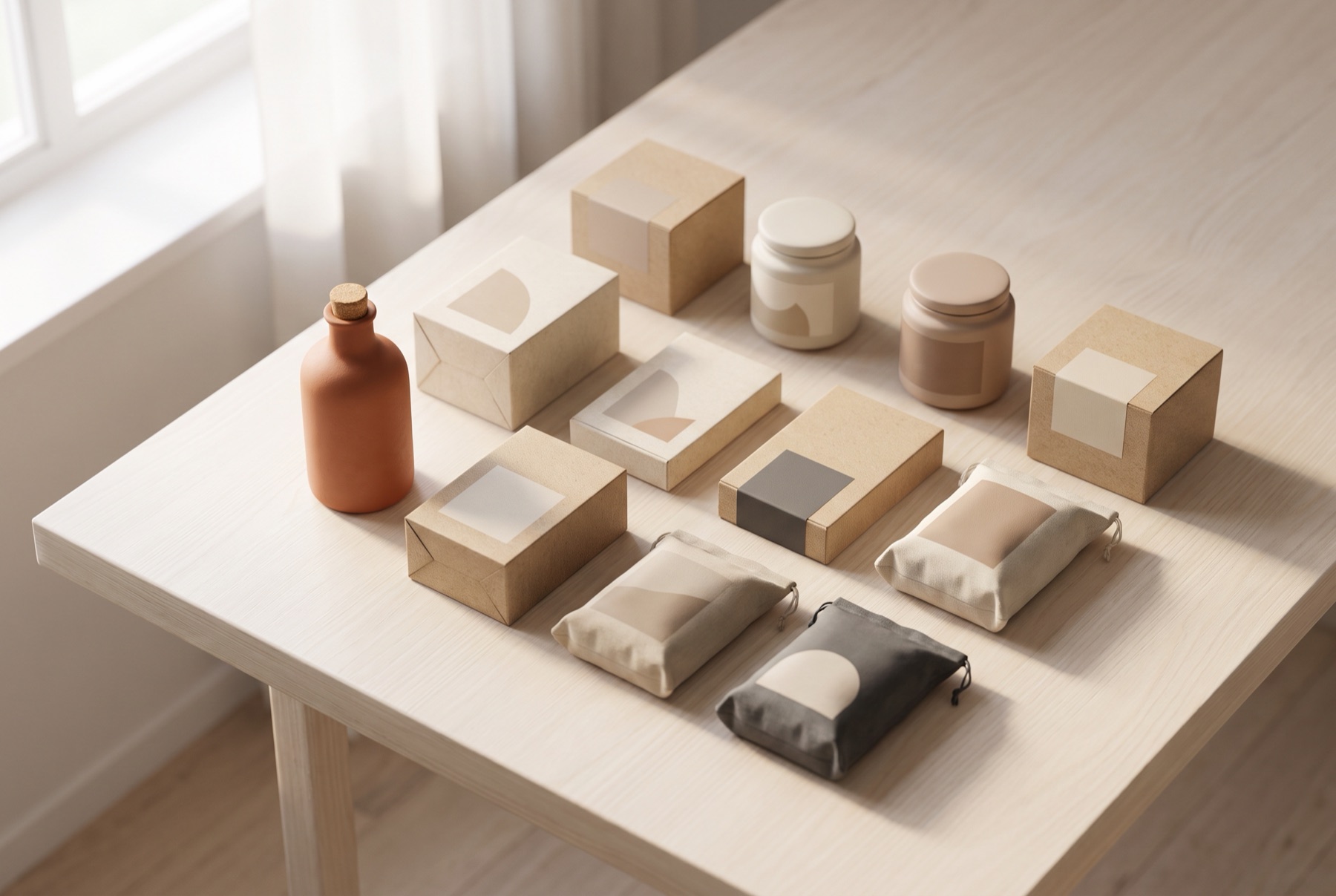
Every brand is seen in context. Customers compare you with the alternatives — on the shelf, in search results, on a high street. Designing without understanding that context is like choosing an outfit without knowing where you are going. Competitor research gives your brand design a clear job: to be recognisably different in a way that matters.
Who are your competitors?
Think broadly:
- Direct competitors sell similar products to the same customers.
- Indirect competitors solve the same problem differently.
- Aspirational brands are the ones you would like to be compared with.
What to look at
Visual identity
- Logos and wordmarks
- Colour palettes
- Typography
- Photography and illustration styles
- Packaging structure and materials
Messaging
- Names and taglines
- Key claims and benefits
- Tone of voice
- Stories they tell
Positioning
- Who they target
- Price point
- Where they sell
- What they stand for
Customer experience
- Website and online store
- Social media presence
- Reviews — what customers love and complain about
How to analyse it
Build a visual map
Gather competitors’ logos and packaging on one board. Patterns appear quickly: common colours, similar typography, repeated imagery.
Plot positioning
Use simple axes — premium versus value, traditional versus modern, playful versus serious — and place each competitor. Gaps on the map are potential opportunities.
Note the conventions
Identify what every brand in your category does. Some conventions are useful because they tell shoppers what a product is. Others are simply habits you can break.
Find the gaps
Look for underserved customers, unused tones, missing benefits, visual space nobody occupies.
Turn research into design direction
Summarise your findings as a short brief:
- Conventions to follow
- Conventions to break
- Where you will position
- How you will look and sound different
An example
Truva‘s identity is a good illustration of finding space. Rather than following the usual pizza-restaurant conventions, the branding married traditional Turkish elements with a contemporary design approach — a distinct, culturally rooted identity in a category that often looks the same.
Keep watching
Competitors change. Revisit your research periodically, especially before redesigns or new launches.
If you want a clear view of your competitive landscape before a brand project, get in touch.