

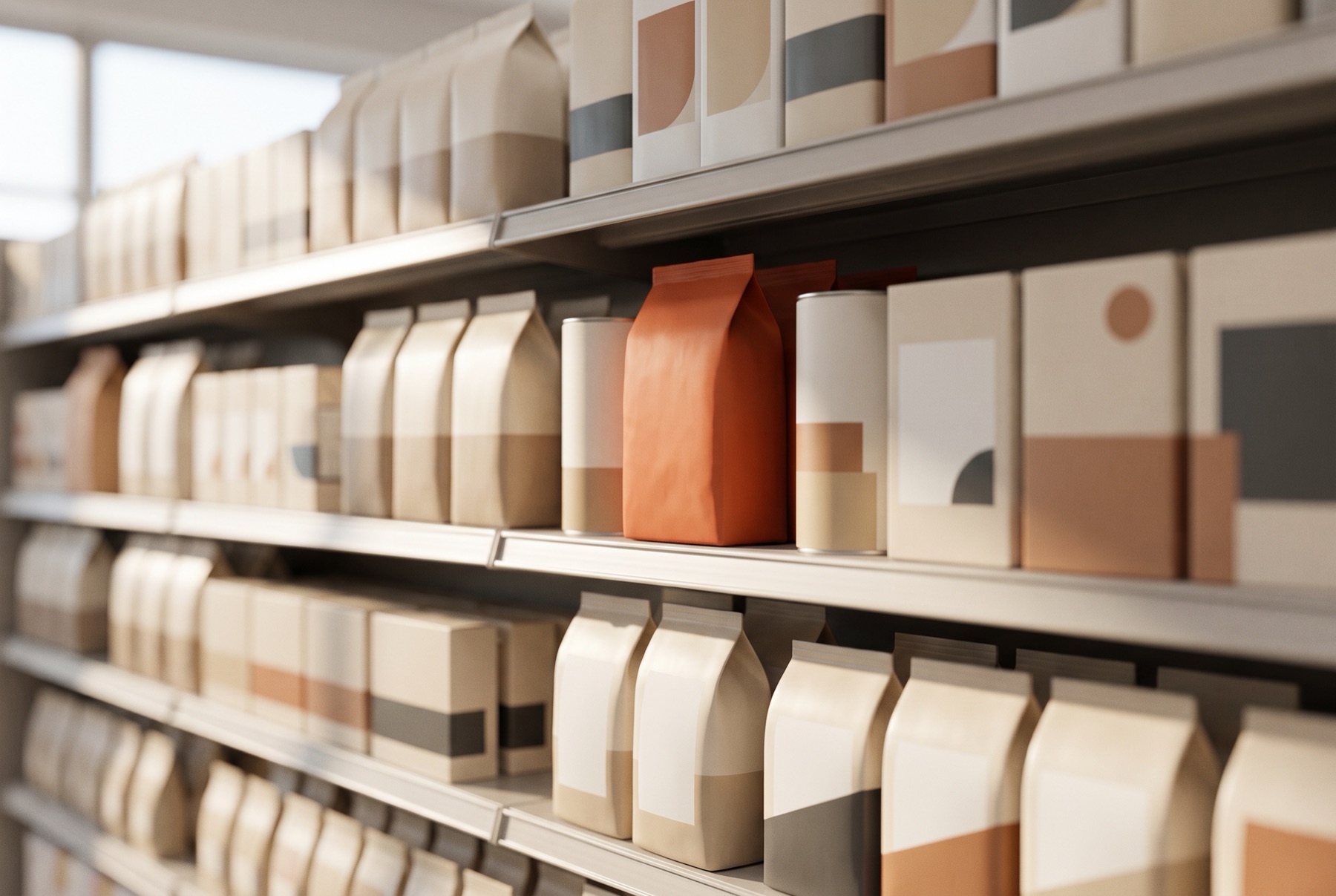
On a crowded shelf, your packaging does the job of an advertisement, a salesperson and a product label at the same time — and it has a couple of seconds to do it. That is why packaging design moves sales in a way that very few other brand decisions do. The pack is present at the exact moment the decision is made.
Why packaging matters more than it seems
Most of the time, a shopper standing in an aisle has not decided which brand to buy. They know the category — salsa, coffee, shampoo — and they choose at the shelf. Advertising and word of mouth can bring someone to the aisle, but packaging has to close the sale.
It also keeps working after purchase. A pack that looks good on a kitchen counter or a bathroom shelf gets seen every day, reminds people to reorder, and gets noticed by guests.
What strong packaging does
It stands out — but in the right way
Standing out is not about being the loudest thing on the shelf. It is about being distinct within the expectations of the category. A salsa still needs to look like it belongs among salsas; it just needs to be the one you notice. Distinctiveness comes from a clear colour strategy, an ownable shape or graphic device, and confident hierarchy.
It communicates quickly
The front panel should answer what is it, what makes it different and why should I trust it — in that order and in seconds. Everything else can go on the back.
It makes choosing easy
If you sell several variants, the packaging should make it obvious which is which without reading the small print. The Roka Salsa redesign leaned on vibrant, colour-coded labels with intricate patterns: each flavour has its own colour, and the pattern carries the artisanal character of the range. The shelf does the navigation.
It signals the right price
Shoppers infer price and quality from design. Overcrowded layouts read as discount. Restraint, good typography and quality finishes read as premium. If your packaging signals a lower price than you charge, shoppers will feel the gap and walk away.
It tells the truth
Packaging that overpromises sells once. Packaging that represents the product honestly — the real colour of the food, a clear window, accurate claims — earns the second purchase, which is the one that builds a business.
Common reasons packaging underperforms
- Too many messages. Five claims at equal size means no claim lands.
- Weak brand block. The logo is too small or changes position across the range.
- Generic photography. Stock imagery that could belong to any brand.
- Designed on a screen, never on a shelf. Artwork that looks great at full size on a monitor and disappears at three metres.
- No system. Each product designed separately, so the range never builds a presence.
How to tell whether yours is working
Look at the facts you have. Has the shelf placement changed? How do sales compare with similar products in the same stores? What do retailers and customers say when they first see it? Then do the simple test: put your pack on a real shelf among competitors, step back, and see what you notice first. If it is not yours, the design has work to do.
The bottom line
Packaging is the last thing a shopper sees before they buy and the first thing they see when they get home. It is worth designing like it matters, because it does.
If your packaging is not pulling its weight, we can help you work out why.