

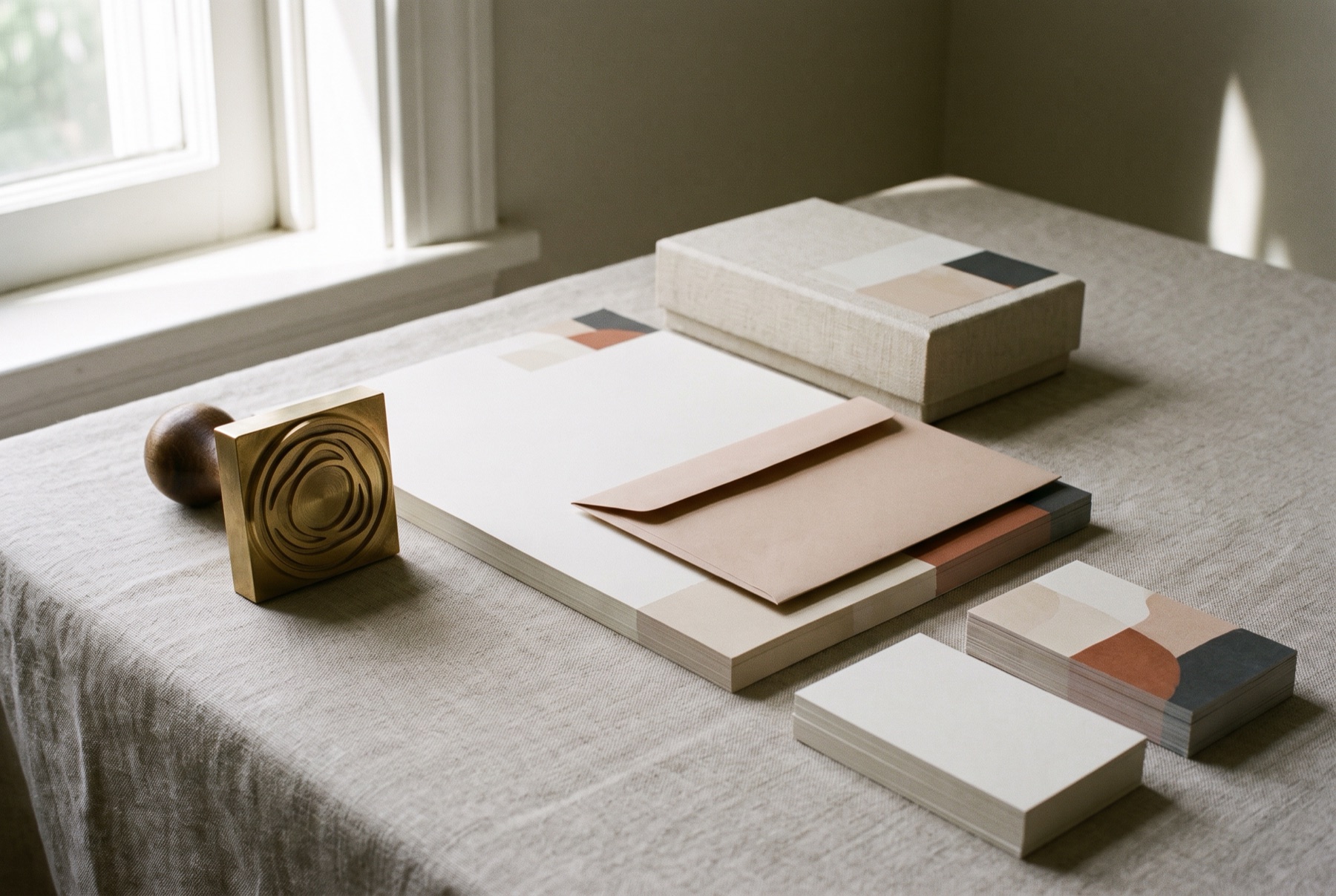
People often use “logo”, “brand identity” and “brand” as if they mean the same thing. They do not. Understanding the difference helps businesses brief designers properly, set realistic expectations and invest in the right things.
The logo
A logo is a mark that identifies a business. It might be a symbol, a wordmark, or a combination. It is a signature — the most concentrated, most repeated visual element of a business.
A logo on its own:
- Identifies you
- Appears on everything
- Gains meaning over time through association
But a logo alone cannot carry a business’s entire visual presence.
The brand identity
A brand identity is the full visual and verbal system that expresses a business. It includes the logo, but also:
- Colour palette
- Typography
- Photography and illustration style
- Graphic elements and patterns
- Tone of voice
- Rules for how it all fits together
An identity lets a business look consistent across packaging, signage, websites, social media, uniforms and everything else — even when the logo is not prominent.
The brand
A brand is bigger still. It is the perception people hold about a business — what they think and feel when they encounter it. It is shaped by everything: products, service, prices, behaviour, communications and design.
You can design a logo and an identity. You cannot fully design a brand; you can only influence it through everything you do.
Why the difference matters
Briefing design
If you ask for “a logo” but need packaging, signage and a website, you will need a full identity. Knowing this up front avoids surprises.
Setting expectations
A new logo will not fix a weak product or poor service. Design supports a brand; it does not replace the substance behind it.
Investing wisely
A great logo without a system leads to inconsistency. An identity system makes every future piece of design faster, cheaper and more consistent.
An example
Food Garden Market shows the difference clearly. The logo is a circle of intersecting stems. The identity goes much further: paint and ink colours specified to Sherwin-Williams and Pantone, a materials palette — faux brick, emerald subway tile, raw steel, weathered teak — so the fit-out and the packaging come from the same vocabulary, plus fixture drawings and zone schematics. The brand is what customers experience in a store designed that carefully.
Where to start
If you are a new business, start with a clear sense of your brand — who you are for and what you stand for. Then develop an identity system, with the logo at its heart. Then apply it consistently, everywhere.
If you want help building an identity that does more than a logo can, get in touch.