Your AI workforce, supervised.
Foreman runs Claude Code and other AI agents across all your projects, in isolated worktrees, behind an approval layer, with every change arriving as a draft pull request you review.
Initializing task environment…
Worktree ready: t-186-apple-image
Pulling latest capabilities…
Step 1/4: Validate inputs
Step 2/4: Call nano_banana
Image generated (1024×1024)
Step 3/4: Save file
Saving to outputs/apple.png
Step 4/4: Validate image
✓ Validation passed
Captured to the Library
The Foreman interface, shown with sample data.
Local-first. Your API keys never leave your keychain. Runs on macOS and Windows, alongside the tools you already use.
- Claude Code
- Git and GitHub
- macOS Keychain
- Windows Credential Manager
- Tailscale
Many agents. One approver.
Run as many agents as you like. Everything that matters comes back to one place for your decision, and nothing reaches your code without it.
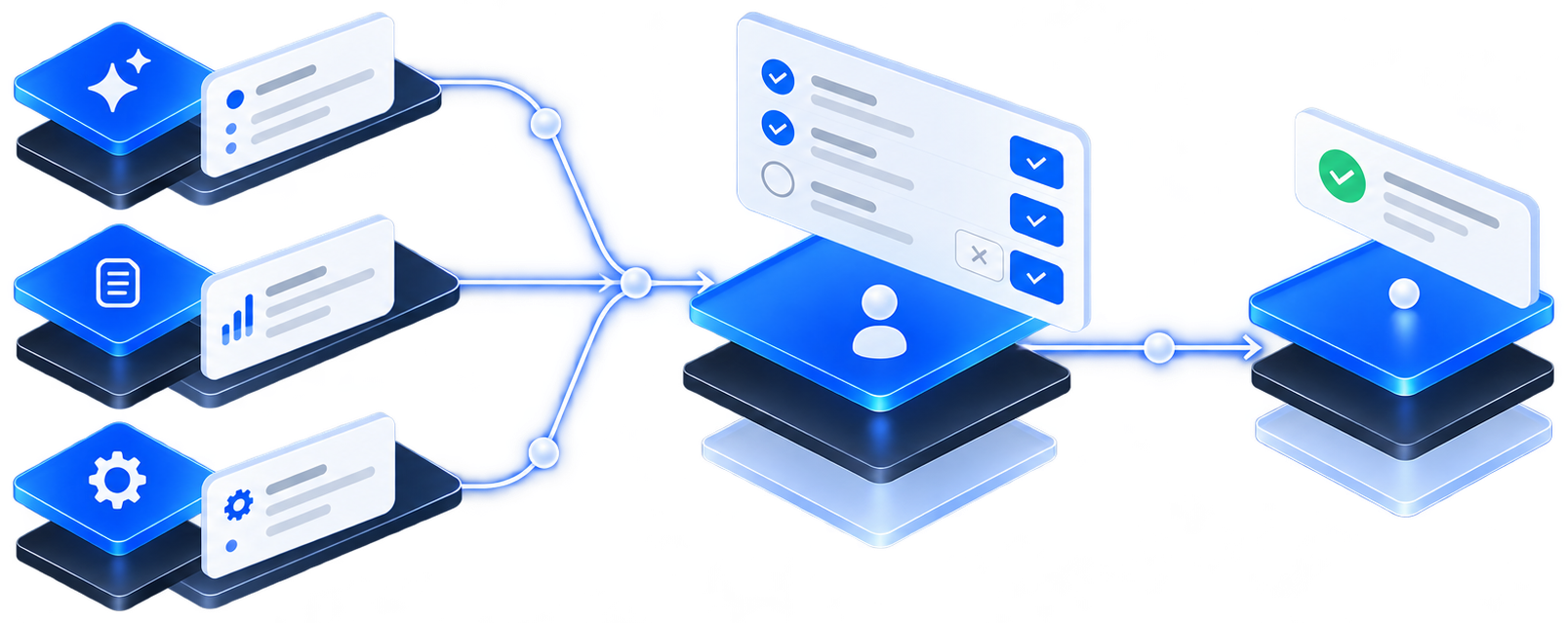
- Agents work in parallelEach in its own worktree, with only the tools you granted it.
- You decideRisky commands and finished work wait in one inbox. Approve or deny from your desk, your phone or by voice.
- Verified work shipsAs a draft pull request, with the checks attached.
Everything an agent does, on the record. Foreman is the layer between “AI can write code” and “I trust what shipped.”
Isolated worktrees
Every task runs on its own branch in its own git worktree. Your checkout is never touched, and a dirty tree is never overwritten.
mainYour working checkoutforeman/t-182-review-loop-docs~/.foreman/worktrees/demo-repo/t-182foreman/t-183-fox-video~/.foreman/worktrees/demo-repo/t-183foreman/t-184-update-deps-r2Retry 2, a fresh worktree and branchDraft pull requests
Work arrives as a draft pull request with the diff, the checks and the history. Force-push doesn’t exist, by construction.
main from foreman/t-182-review-loop-docs- Build passed in the task’s worktree
- Diff, checks and history attached
- Opened as a draft, never as ready
Approval center
Risky commands pause for your yes, with risk-based expiry, an append-only audit log and autonomy levels per project. Try it.
~/t-184 npm install sharp@0.33.4- Why it paused
- Installing a dependency changes the lockfile.
- Reversible
- Yes, from the checkpoint taken at 10:14
Live output and the Library
Watch every worker stream in real time. The files it produces are captured into a permanent Library, with previews.
Step 1/4: Validate inputs
Step 2/4: Call nano_banana
Image generated (1024×1024)
Step 3/4: Save file
Saving to outputs/apple.png
Step 4/4: Validate image
✓ Validation passed
Capability library
Grant agents exactly the tools you choose: image, video and speech generation, chat models and more, scoped per project.
nano_bananaImage generation · GeminiklingVideo generationrunwayVideo generationelevenlabsSpeechkimiChat model · Moonshotopen_aiChat modelVoice control
Push-to-talk from your desk, or from your phone over your private tailnet. Foreman reads every command back before it runs.
“What is worker-07 doing?”
Running npm test in Demo Repo. Two minutes in, nothing has failed.
“Start the next task. Approve the safe edits.”
Three numbers, built to stay at zero.
Not settings you could forget to switch on. They are how Foreman is made.
- 0Force-pushes
Force-push doesn’t exist in Foreman. Not switched off: never built.
- 0Pull requests merged by Foreman
Every change arrives as a draft. The merge button belongs to you.
- 0Secrets in the database, logs or transcripts
Keys stay in your OS keychain and resolve only at run time.
From instruction to merged pull request.
One loop, enforced everywhere: agents propose, you approve. Click a step, or let it run.
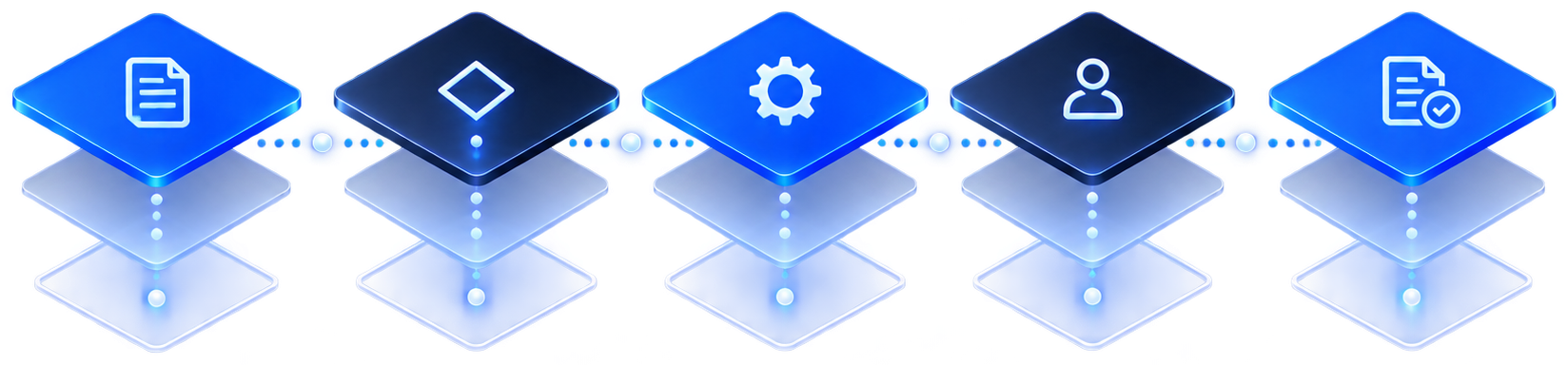
- 1Your taskTyped or spoken
- 2Its own worktreeYour checkout untouched
- 3The agent worksStreamed and checkpointed
- 4You approveAnything risky waits
- 5A verified draft PRBuilt and tested first
Built paranoid, so you don’t have to be.
- Secrets live in your OS keychain
Never in the database, never in logs, never in a response body.
- Local-first
The orchestrator binds to loopback by default. Remote access is opt-in, over your private tailnet.
- Policy engine
Command classification and filesystem boundaries, checked before anything runs.
- Append-only audit
Every task, approval and artifact, traceable end to end.
You decide how far each agent may go.
Set an autonomy level per project. Protected operations ask for approval at every level, and source changes always arrive as a draft pull request.
Observe
Inspects and explains. Cannot edit anything.
Assisted
Prepares plans and patches. You approve every edit and command.
Supervised
Edits, tests, builds and commits inside its worktree. Stops for anything destructive, credential, deployment or billing related.
Safe Autonomous
Works through a defined backlog inside its repository, branch, file scope, command policy and retry, time and cost limits.
Shipped, and written down.
What changed, when, and what was verified live rather than only in tests. Full changelog
Complete now means verified
After a worker exits, Foreman runs the project’s build in the task’s worktree, and the exit code decides the task’s real status.
Sub-second voice replies
Spoken answers now arrive in under a second for most turns, down from two to four.
Fleet, slice one
One address for every machine you run Foreman on, with a device registry and projects across machines.
Stop babysitting. Start supervising.
Put every AI agent you run behind one review loop.
Thanks. You are on the list for an invitation.
This is a Lacoura portfolio website: the form does not send anywhere.